





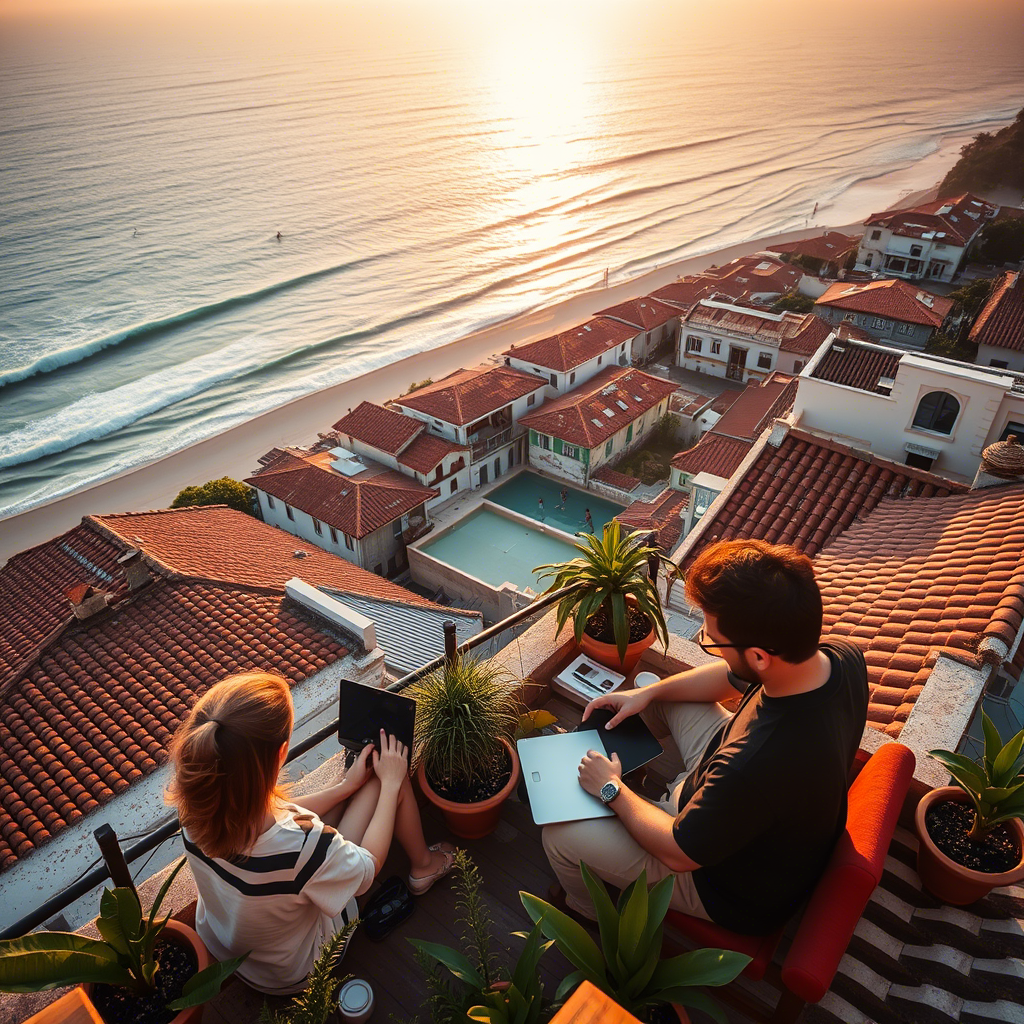
By Elber Galarga, CrazyLoCo Correspondent (Currently Wi-Fi-Hopping Somewhere Near the Equator)
Absolutely! Here’s a full, engaging article draft tailored for CrazyLoCoNews.com—a site that thrives on quirky, thought-provoking, and slightly offbeat takes on modern life. This piece blends investigative insight, vivid storytelling, and a touch of irreverent humor—perfect for a readership that loves the weird, wild side of culture.
“Home is where the Wi-Fi connects automatically.”
— Anonymous digital nomad, probably typing this from a Bali café with a $7 smoothie bowl
It’s 3 a.m. in Lisbon. The cobblestones glisten from a sudden downpour. Inside a 24-hour co-working space tucked beneath an old tram station, a Canadian UX designer sips espresso while debugging code. A mile away, a Berlin-born YouTuber films a “day in my life” vlog in her rented studio—wearing noise-canceling headphones so her roommate, a Thai visa consultant, can sleep. Meanwhile, in a beachfront bungalow in Tulum, a 28-year-old from Ohio closes her laptop after finishing a Zoom call with her boss in Denver. She hasn’t seen snow in two years.
They don’t know each other. But they share a lifestyle that’s quietly rewriting the rules of work, travel, and belonging: digital nomadism.
And it’s no longer a fringe experiment. It’s a global movement—part liberation, part illusion, part economic disruption—with passport stamps as résumé lines and Slack emojis replacing watercooler gossip.
🏖️ The Dream: Work. Travel. Repeat. (And Maybe Get a Surfboard?)
For years, the idea of working remotely while sipping coconut water on a tropical beach was the stuff of Instagram fantasy. Then the pandemic hit. Offices emptied. Laptops became passports. And suddenly, millions discovered: Wait… I don’t actually need to be in a cubicle to do my job.
Enter the digital nomad boom.
From Bali to Medellín, from Tbilisi to Lisbon, remote workers flooded into cities offering cheap living, strong internet, and digital nomad visas. Countries like Antigua, Costa Rica, and Estonia rolled out red carpets—literally—inviting remote workers to live tax-free for months, boosting local economies with every avocado toast and coworking membership.
In 2024, over 40 million people self-identified as digital nomads. And the number is growing—especially among Gen Z, who view “location independence” not as a luxury, but a birthright.
🧳 But Here’s the Catch: You Can’t Airbnb Your Soul
It sounds like paradise. But peel back the filter, and the nomad life gets messy.
Take Maya, a freelance copywriter from Chicago who spent 18 months hopping between Mexico, Portugal, and Indonesia.
“I thought I was chasing freedom,” she told me over a spotty Zoom call from a van in the Atlas Mountains. “Turns out, I was just chasing Wi-Fi and cheaper rent. I missed my sister’s wedding. I didn’t have a single doctor who knew my medical history. And after a year, I realized I hadn’t planted anything—not a plant, not a friendship, not a memory that lasted longer than a month.”
She’s not alone. Psychologists are now calling it “nomad fatigue”—a cocktail of loneliness, rootlessness, and the eerie feeling that your life is a series of temporary logins.
And then there’s the gentrification problem. In places like Canggu, Bali, or Bohemian Mexico City, digital nomads—often earning in strong currencies—have driven up rents, pushing locals out of their own neighborhoods. Locals joke: “First the surfers, then the yogis, now the coders.”
One café owner in Chiang Mai put it bluntly:
“They come for ‘authenticity,’ but they only want the parts that look good on Instagram. They don’t want the heat. They don’t want the monsoon. They don’t want to learn the language.”
🛂 The New Passport: Visa Hacks and “Workation” Resorts

Governments aren’t blind to this. Over 50 countries now offer digital nomad visas—special permits that let remote workers live legally for 6–12 months, often with tax breaks.
Want to work from Barbados? There’s a “Welcome Stamp” visa.
Dream of typing under the Northern Lights in Iceland? They’ve got you covered.
Even Ukraine launched a nomad visa during wartime—because hey, if you’ve got a laptop and a VPN, why not?
And the private sector is cashing in. Enter co-living spaces: boutique dorms for grown-ups who want Wi-Fi, yoga, and networking with other “hustlers.”
Places like Selina, Outsite, and Sun and Co offer all-in-one packages:
- Private room? Check.
- High-speed internet? Check.
- Daily meditation circle and taco night? Double check.
It’s like summer camp for millennials who maxed out their student loans on a coding bootcamp.
💬 So… Are They Tourists? Workers? Colonizers?
That’s the big question nobody wants to answer.
Digital nomads aren’t immigrants. They don’t integrate. They don’t pay long-term taxes. They don’t vote. They’re transient economic migrants with Apple Watches.
Some call them the new digital colonizers—wealthy outsiders reshaping local economies without accountability.
Others see them as pioneers of the post-office world, proving that work doesn’t have to mean suffering through rush hour and fluorescent lighting.
And then there’s the philosophical twist:
What happens to identity when you have no fixed address?
Are you the sum of your Slack channels? Your Airbnb reviews? Your LinkedIn connections?
One nomad in Lisbon put it poetically:
“I used to say, ‘I’m from Chicago.’ Now I say, ‘I’m from Zoom Room 4.’ It’s not deep. But it’s honest.”
🔮 The Future: Nomad Cities, Floating Offices, and the Death of “HQ”
The next frontier? Nomad nations.

Yes, really.
Projects like NomadX and Remote Year are creating mobile communities—entire teams that travel together, working from a new city every month. Think The Office, but set in Marrakech, then Lisbon, then Hanoi.
There are even proposals for floating co-living ships—offshore micro-nations where digital workers live tax-free, beyond the reach of any government.
And companies are adapting. GitLab, Automattic (WordPress), and Buffer operate with 100% remote teams. No HQ. No office politics. Just pixels and paychecks.
🧳 Final Thought: Is Freedom Just Another Kind of Cage?
Digital nomadism promises freedom. But freedom from what?
From offices? From routines? From belonging?
Maybe the real luxury isn’t being able to work from anywhere.
Maybe it’s being able to stay somewhere—to know your barista’s name, to watch the same trees change with the seasons, to be part of something that outlasts your laptop battery.
Or maybe that’s just nostalgia talking.
Because for millions, the world is now their office.
And the only thing they’re logging into every morning is… themselves.
📸 Sidebar: Nomad Hotspots 2025 (According to Overworked Freelancers on Reddit)
- Lisbon, Portugal – Great Wi-Fi, cheap wine, too many startups.
- Medellín, Colombia – Eternal spring, friendly locals, occasional power outages.
- Bali, Indonesia – Spiritual vibes, $3 coconuts, and 4-hour traffic jams.
- Tbilisi, Georgia – Soviet architecture, $2 craft beer, and a surprisingly fierce tech scene.
- Tulum, Mexico – Yoga, cenotes, and the constant fear of getting scammed.
🔌 The CrazyLoCo Nomad Survival Kit (Tested Across 5 Countries)
We asked real digital nomads what gear actually works when your office moves every month. No fluff. No gimmicks. Just the essentials that survived monsoons, sketchy Wi-Fi, and hostel roommates who snore like chainsaws.
👇 Here’s what they swear by:
🔋Check this on Amazon– Anker PowerCore 26800 Portable Charger
“This thing charged my phone, laptop, and camera during a 12-hour bus ride in the Andes. Still had 40% left.”
→ Never run out of juice in a café with spotty outlets.
🎒Check this on Amazon– Osprey Farpoint 40 Travel Backpack
“I’ve hiked volcanoes, taken overnight ferries, and survived Bangkok traffic with this. Still looks new.”
→ Carry-on only. No checked bags. No stress.
⌨️ Check this on Amazon–Logitech MX Keys Mini + MX Master 3 Combo
“After months of typing on tiny hotel desks, this turned my setup into a real office.”
→ Ergonomic magic for your wrists and productivity.
💻Check this on Amazon– Apple MacBook Air M4
“Light, fast, and lasts 18 hours. I’ve written entire articles on a beach with no outlet.”
→ The go-to laptop for 70% of nomads we surveyed.
💬 CrazyLoCo readers get first dibs: All links go to Amazon’s current best price.
🛒 Click, Link, and keep working from anywhere—without losing your gear or your mind.
Disclosure: This post contains Amazon affiliate links, which means I may earn a small commission if you make a purchase through my links — at no extra cost to you.”